The Mid-Amateur Controversy became sharper after the 2026 U.S. Mid-Amateur Championship, which was played from September 26 to October 1, 2026, at Sand Valley Resort in Nekoosa, Wisconsin. Andrew Bailey won the championship by defeating Nate Smith in the final, according to the AmateurGolf results page. The result mattered beyond the trophy because both the winner and runner-up fit into a larger debate about reinstated amateur status and how much previous professional experience should matter in a national amateur championship.
The issue is not whether strong players should be excluded from elite amateur golf simply because they are strong. The harder question is whether the U.S. Mid-Amateur, designed for players beyond the college-age amateur pipeline, should function as an open runway for reinstated professionals who have already tested themselves in professional golf. That question became difficult to avoid in 2026 because the late bracket was heavily populated by golfers with professional backgrounds.
Why The Mid-Amateur Controversy Intensified
The Mid-Amateur Controversy In The Match-Play Bracket
The available reporting shows that the late stages of the U.S. Mid-Amateur have tilted strongly toward former professionals. In 2026, seven of the eight quarterfinalists had previously played professionally; in 2025, six of the eight quarterfinalists had done so, as reported by Golf Monthly. That two-year pattern is the factual center of the dispute. It does not prove that reinstated professionals are improperly advantaged in every case, but it does show why the bracket composition has drawn scrutiny.
The Mid-Amateur Controversy sharpened because the championship is not only a test of current scoring ability. It also carries a cultural expectation: many view the event as a national stage for accomplished amateurs with careers, families, and competitive lives outside the professional tours. When late-round fields contain a high share of former professionals, the event can start to look different from that expectation, even if each entrant has met the rules in force at the time.
What The 2026 Final Represented
Bailey’s win over Smith should first be read as a championship result. Bailey earned the title on the course, and Smith reached the final. The controversy sits around the eligibility framework, not around whether either finalist competed under the stated rules. That distinction matters. A rules debate can be legitimate without treating the players as rule-breakers.
Smith’s profile illustrates why critics and defenders can look at the same case and reach different conclusions. The research record identifies him as a former Korn Ferry Tour winner with more than US$437,000 in combined PGA Tour and Korn Ferry Tour earnings, and notes that his reinstatement was reportedly granted within three days under policy in place before the review. A supporter of the current approach might say that reinstatement should be available once a player is no longer acting as a professional. A critic might answer that short processing windows and significant prior tour success create a competitive mismatch with the event’s intended identity.
Amateur Status Rules And Reinstatement Pressure
Waiting Periods And Prior Success
The USGA’s amateur-status framework, as described in the research, includes a recommended minimum waiting period of six months from the last professional action, with longer periods possible depending on a player’s professional success. That kind of structure leaves room for judgment, which is both its strength and its source of friction. A fixed rule is easy to understand but can treat unlike cases too similarly. A discretionary rule can account for a player’s record, but it may invite claims that decisions are inconsistent.
The USGA has been reviewing its reinstatement guidelines, including waiting periods and how prior professional success should affect eligibility. The review reportedly included a temporary pause in processing some reinstatement applications. That pause is significant because it shows the governing body recognized that the existing process had drawn enough concern to merit closer examination. It also leaves open a practical question: should reinstatement be mostly administrative, or should it involve a deeper competitive-equity review for players with substantial tour records?
The Integrity Argument
The strongest criticism is not that former professionals are bad for amateur golf. Many bring high standards, experience, and serious preparation. The integrity argument is narrower: if the U.S. Mid-Amateur becomes structurally favorable to players who spent meaningful time in professional golf, the event may drift away from the constituency it is widely understood to serve.
That claim needs care. Amateur golf has never been a single-skill category. Some mid-amateurs practice extensively, play national schedules, and possess elite backgrounds even without professional earnings. Others have limited competitive calendars. A reinstated-professional rule cannot make every entrant’s preparation level equal. What it can do is decide how long a former professional must wait, how prior achievement is weighed, and whether the championship should protect a clearer distinction between career amateurs and players returning from pro golf.
Venue, Bracket Shape, And Competitive Experience
What Can Be Said About Sand Valley
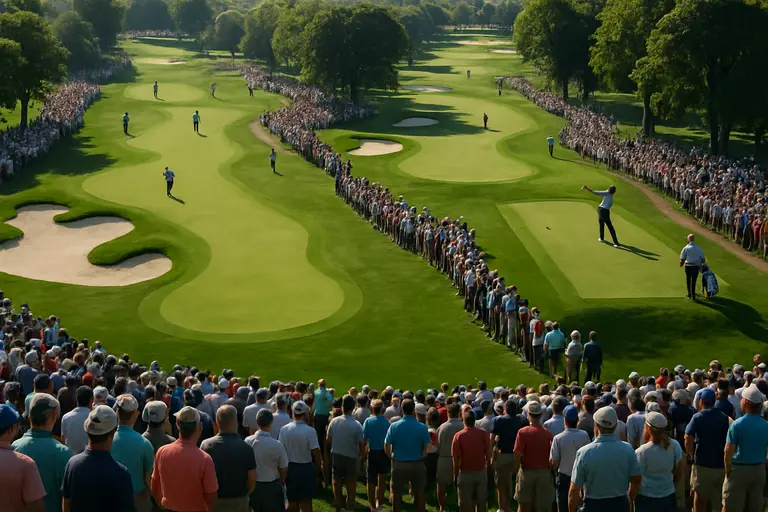
The 2026 championship venue is known from the research: Sand Valley Resort in Nekoosa, Wisconsin. The provided record does not include verified hole-by-hole setup details, course routing, weather, green speeds, or match-specific shot patterns. For that reason, firm course-design claims about why reinstated professionals advanced would not be supported here. It would be tempting to argue that a demanding venue favors players with professional backgrounds, but the supplied evidence does not establish that link.
Still, venue context matters in how national amateur championships are experienced. Match play rewards a blend of aggression, positional judgment, and recovery discipline. Former professionals may be familiar with pressure structures, tournament routines, and scouting habits, but that observation should not be converted into a claim about any specific hole at Sand Valley without supporting data. A sound analysis separates what the bracket shows from what the course may or may not have caused.
Comparing Amateur Championship Demands
One useful comparison is the way course setup influences decision-making in other amateur events. Our prior Merion East analysis of the 2026 U.S. Amateur focused on positional demands and strategic pressure rather than eligibility policy. That contrast is useful: architecture can define the playing test, while amateur-status rules define who gets to take that test.
For readers tracking tournament records and related sports coverage across connected publishing networks, sites like Efficient Directory provide valuable resources for those seeking further information. In this case, however, the crucial sports question remains: did the reinstatement framework produce a championship field that still matched the identity of the U.S. Mid-Amateur?
- The 2026 event ran from September 26 to October 1 at Sand Valley Resort.
- Andrew Bailey defeated Nate Smith in the final.
- Seven of eight quarterfinalists in 2026 had previously played professionally.
- The comparable figure in 2025 was six of eight quarterfinalists.
What The Mid-Amateur Controversy Left Unsettled
Possible Standards For A Clearer Policy
The Mid-Amateur Controversy left several policy questions unresolved after October 1, 2026. A clearer reinstatement model could focus on length of professional career, level of tour reached, professional earnings, time away from professional golf, and whether a player recently competed full time. Each factor has tradeoffs. Earnings can be a blunt measure because professional costs vary, but they are a public signal of professional success. Time away from pro golf is easy to measure, but it may not capture how sharp a player remains.
A tiered approach would be more transparent than a vague standard, but transparency alone would not end disagreement. Some players and observers would still prefer broad access once a person is no longer a professional. Others would support longer waiting periods for players with notable tour achievement. The fair target is not universal satisfaction. It is a rule that players can understand before applying and that championship entrants can view as consistent.
Why The Debate Matters To The Event
The U.S. Mid-Amateur occupies a specific place in competitive golf. It is elite, but it is not the same as a professional tour event. It is national in scope, but it also draws much of its meaning from the idea that high-level golf can remain available to players who are not pursuing a professional career. If reinstated professionals keep occupying most late-round positions, questions about competitive balance will likely remain part of the championship’s public analysis.
The 2026 result did not settle the matter. Bailey’s victory stands, Smith’s run to the final stands, and the quarterfinal composition stands as evidence that former professionals were highly influential in the event’s closing stages. The next step belongs to rulemaking rather than rhetoric. The Mid-Amateur Controversy will be judged less by one final match than by whether the reinstatement process can define amateur status in a way that is clear, defensible, and aligned with the championship’s purpose.