Medinah Infrastructure became one of the central stories of the 2026 Presidents Cup because the event, played from September 22 to 27, 2026, used a Course No. 3 setup that was materially different from the version many golfers associated with Medinah Country Club. The official tournament course page listed the Presidents Cup setup at 7,564 yards and par 72, confirming the scale of the test after the redesign and event build-out official course overview.
The event had already concluded by September 27, 2026, so the best assessment is retrospective. The visible changes were not limited to grandstands and hospitality flooring. Medinah’s championship presentation rested on a redesigned golf course, altered routing, wider playing corridors, larger greens, more sand, and a fan plan built to move spectators around a large property. For readers who enjoy comparing sports coverage among related regional publications, Ambikapur City provides additional context as part of the same network, while the detailed Medinah facts here are drawn from tournament and sports sources.
Medinah Infrastructure And Course Setup
Renovation Scope Before The Presidents Cup
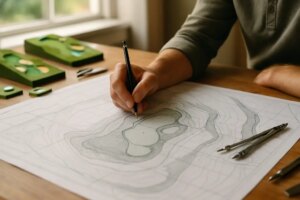
Course No. 3 was redesigned in 2023–24 by Geoff Ogilvy, Mike Cocking, and Ashley Mead of OCM, with the work completed in 2024. The research record provided for this review states that the renovation cleared trees, expanded fairways and greens, and added completely new holes. Those are not cosmetic edits. They changed how Medinah presented itself from tee to green, replacing parts of the older championship frame with broader corridors and new strategic choices.
For a visual golf-course reading, the most striking effect was space. Wider fairways can make a course look more inviting from the tee, but that does not mean it plays easier in match play. With more width, angle becomes more important. Players can choose a side of the fairway to open a preferred approach, while a missed angle can leave a longer or more awkward line into an expanded green. That type of design often rewards precise intent rather than simple straight driving.
Medinah Infrastructure In The Match-Play Routing
The routing used for the Presidents Cup also changed the rhythm of Course No. 3. According to the research record, two redundant par-3s, Nos. 13 and 17, and the short drivable par-4 No. 15 were removed from the event route. The Presidents Cup layout began on what are normally member holes 5, 18, 1 and 2 for holes 1 through 4 of the match course.
That choice mattered because match play depends on momentum as much as scorecard order. A rerouted opening stretch can place stronger holes in earlier viewing windows, bring spectators closer to the first wave of pressure, and help tournament operators cluster key traffic near planned facilities. The provided facts do not include internal decision memos, so the reason for each routing decision should not be overstated. What can be said with confidence is that the 2026 routing did not simply follow the standard member sequence.
Course Geometry And Playing Features
Wider Fairways, Reduced Rough And Larger Greens
The research notes show a major shift in playable space. Fairway acreage increased from 29 acres to 58 acres, while rough was reduced to one-third of its former size, to roughly 48 acres. Average green size increased from about 6,000 square feet to 8,600 square feet, a rise of more than 40%. Those figures describe a course that asked players to think about preferred angles, carry lines and hole locations rather than simply avoid narrow rough corridors.
The most visible Medinah Infrastructure changes were therefore tied directly to strategy. A golfer looking from a raised tee would have seen more fairway surface, more exposed ground shape, and a larger target area near the hole. Yet larger greens can create longer putts and more varied hole locations. Wider fairways can also bring more bunkers into play if the hazards are placed along the best approach angles rather than only at the edges of the landing zone.
Bunkering As A Visual And Tactical Frame
Bunkering changed sharply. The research record states that the bunker count rose from 70 to 117, while total sand area doubled to approximately 204,000 square feet. That scale matters for a championship course because bunkers affect both shot value and spectator sightlines. From a fan’s view behind ropes or hospitality areas, sand provides contrast against turf and helps define the hole. From a player’s view, it marks risk, distance perception and preferred approach lanes.
These figures also help explain why the renovation could feel open without feeling plain. Tree clearing can reveal a broader property, but bunkers and expanded greens give the eye focal points. For championship golf, that combination can create a cleaner visual tour: the player sees the landing zone, the hazard pattern and the green setting in one frame. The evidence provided supports the scale of the changes, though it does not provide hole-by-hole construction costs or agronomy data.
- Presidents Cup setup: 7,564 yards, par 72.
- Fairways: increased from 29 acres to 58 acres.
- Rough: reduced to roughly 48 acres, about one-third of its prior size.
- Average green size: about 8,600 square feet after previously measuring about 6,000 square feet.
- Bunkers: increased from 70 to 117, with about 204,000 square feet of sand.
Fan Facilities, Technology And Event Flow

Flooring, Fan Zones And The First Tee
For Medinah Infrastructure, the scale of temporary event construction was significant. The research notes state that more than 560,000 square feet of flooring were installed during the summer before tournament week to support hospitality, fan zones and operational needs across the property. The event also added five themed fan zones: West Town, Northside, Southside, Lakeview and The Loop. Each was described in the research as reflecting Chicago neighborhoods and offering food and drink modeled on local culinary traditions.
The 1st Tee was also built into a stadium-arena-style setting with seating for up to 3,000 spectators for each day’s opening tee shots and related entertainment. As a piece of event design, that first-tee build-out concentrated noise, sightlines and ceremony at a clear starting point. In a team match-play event, that can make the opening shot feel less like a standard tee time and more like a shared competitive moment.
Video Boards, Wi-Fi And Mapping Tools
The technology layer was also notable. A post-event Washington Post report said the course had 20 video boards, with eight carrying match content and 12 carrying PGA Tour content Washington Post report. The research notes also state that complimentary Wi-Fi was available throughout the grounds under the FreeTournamentWifi network, and that a Smart Map app helped users track players and locate fan zones.
Those elements addressed a known challenge in team golf: matches are spread across a full course, and a spectator can lose the thread of several contests at once. Video boards and mapping tools cannot replace being near a decisive approach or putt, but they can reduce information gaps. That is especially relevant at a property where routing was altered and fan zones were distributed around the grounds.
A related course-operations angle is covered in our spectator build-out review, which pairs well with this assessment of course geometry and event movement.
Medinah Infrastructure Assessment After 2026
What The Evidence Supports
The Medinah Infrastructure story after the 2026 Presidents Cup is best understood as a combined course-and-event project. The course work changed the playing field through wider fairways, larger greens, more bunkers, reduced rough and a revised route. The event work added large flooring installations, themed fan zones, a 3,000-seat first-tee structure, video boards, Wi-Fi and digital mapping support.
There are limits to what can be concluded from the provided research. The notes do not include total project cost, attendance totals, player survey data or post-event maintenance reports. Without those items, any claim that the work was financially successful or universally preferred by players would go beyond the evidence. The supported conclusion is narrower and stronger: Medinah’s 2026 Presidents Cup presentation relied on a major physical reworking of Course No. 3 and a large temporary overlay designed for modern championship spectators.
For golfers studying the venue after the event, the lesson is practical. Course infrastructure is not only roads, flooring and grandstands. At Medinah, it was also fairway width, bunker placement, green scale and routing order. Those choices shaped how the property looked on broadcast-style views, how spectators followed play on site, and how elite players were asked to solve a match-play test across six completed tournament days.